How many restrooms does a race need?
Start with the runner count, then split it between the start/finish corral and the course itself. Most races put 60 to 70 percent of units at start and finish, since that is where crowds pool before the gun and after the tape. The rest go on course, spaced at aid stations roughly every mile to mile and a half. How Many Porta Potties Do I Need walks through the math in more depth, but a rough rule for Buena Park races: figure one standard porta potty rental per 15 to 20 runners at the corral, plus 2 to 3 units per aid station.
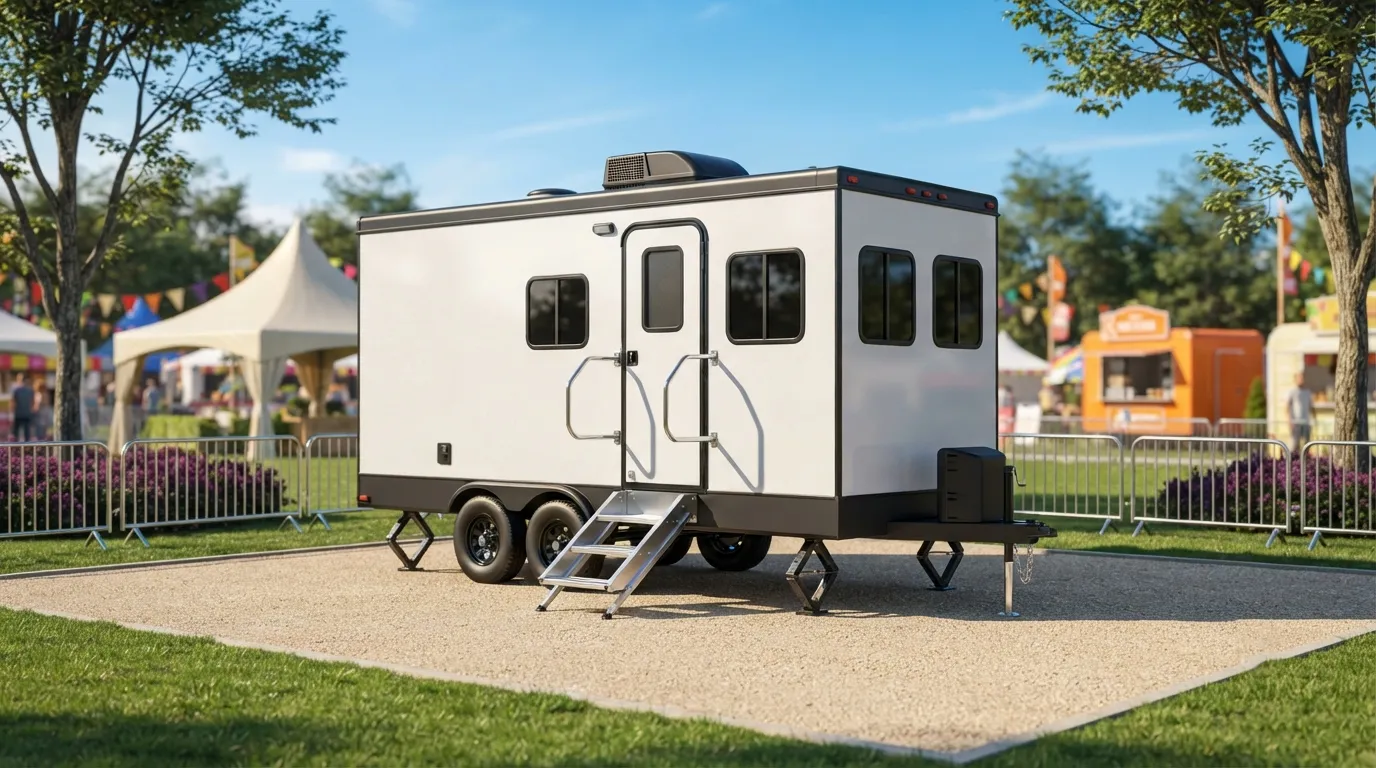
Pricing follows an event-day structure rather than a daily one. A block of standard units for a single event day runs $200 to $800 depending on count and add-ons, and you'll want a portable restroom rental quote that itemizes delivery separately from unit cost. Delivery fees for a race typically land in the $100 to $500 day-rate band, and that number moves with how far the crew has to run hose and stage trucks across a closed course. If the race includes a VIP or media area, a deluxe flushable porta potty or a compact 2 stall restroom trailer handles that crowd better than standard units alone.
Don't forget accessible units. ADA Standards section 213.2 requires at least 5 percent of any clustered bank to be accessible, never fewer than one, so a 40-unit deployment needs at least two ADA accessible porta potty units, each with a 60 inch turning circle per section 304.3.1 and a 32 inch clear door opening under section 404.2.3.
Where should restrooms go along the course?
Aid stations, corrals and the finish chute drive placement, and Buena Park's race routes usually thread through areas where truck access is not guaranteed at every mile marker. Crews need roughly 60 feet of straight clearance behind a delivery truck to set units safely, which is the same clearance a roll-off dumpster rental needs for a construction site, so route planners should flag any mile marker that's hemmed in by parked cars or barricades. ADA Standards section 302.1 requires the ground under and around each unit to be stable, firm and slip resistant, which rules out soft turf or loose gravel as a placement spot without matting.
Course marshals and finish-line staff also need power for timing equipment, lighting and PA systems, and that's where a temporary power pole comes in alongside the restroom plan. Know how to brace a temporary power pole before race morning: it needs a stable base, guy wires or a support bracket rated for wind load, and ground-fault protection per OSHA 1926.404(b)(1)(ii) if it's feeding tools or equipment near water stations. Pair that with a light tower rental for early starts or evening finishes, and route both away from runner lanes so cords and poles don't become a tripping hazard.
Barricades along the course should meet ANSI D6.1 per OSHA 1926.202, which matters most at aid stations where restroom lines and runner traffic cross. If the race runs near Cerritos, 4.0 miles west of Buena Park, or toward La Mirada, 4.1 miles north, factor that drive time into your delivery window since trucks may need to service multiple staging points across town lines.
Do runners need handwashing stations too?
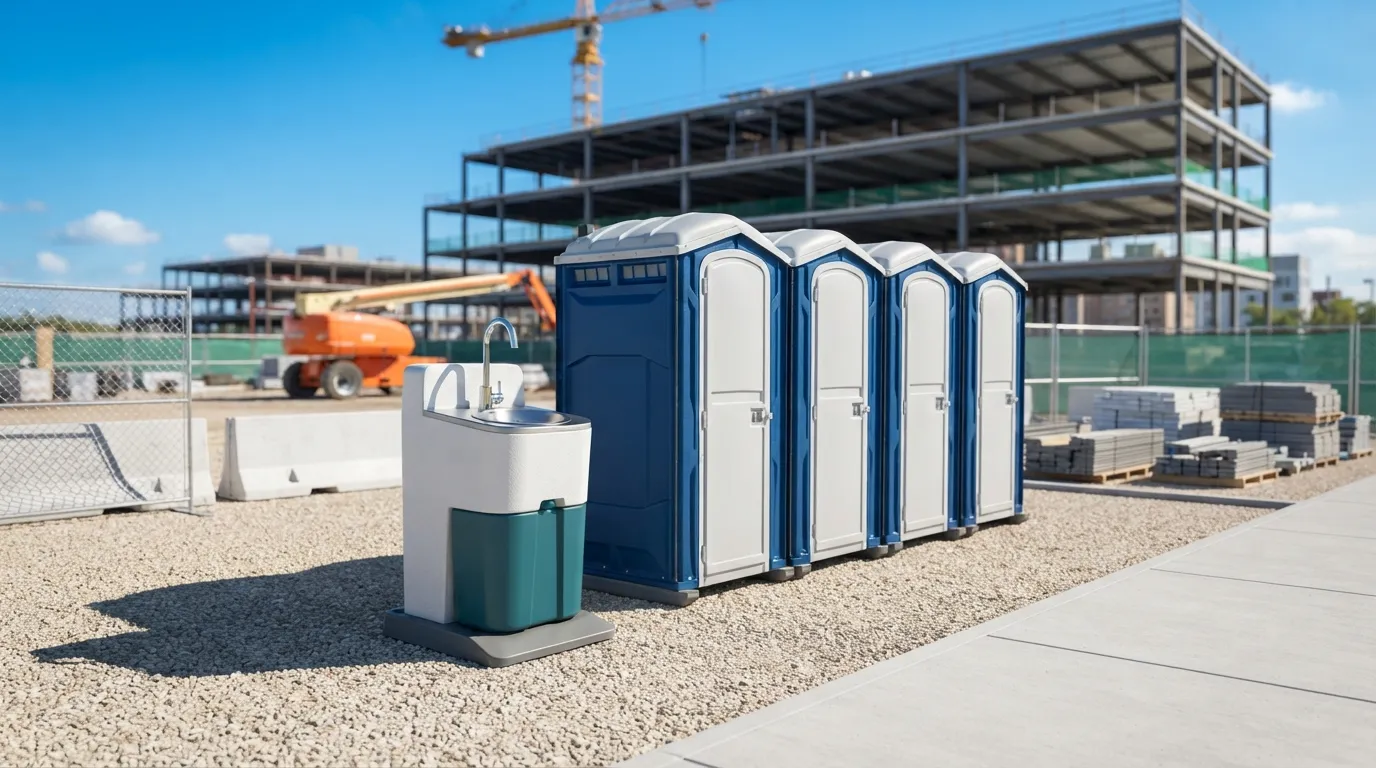
Yes, and most race organizers underestimate this until aid station volunteers start handling food. 29 CFR 1910.141(d)(2) requires soap and towels or a hand-drying device at any washing station, since hand sanitizer alone doesn't satisfy that standard. A handwashing station rental or a compact portable sink rental belongs at every aid station handing out fruit, gels or post-race snacks. For races with a big post-finish festival area, a festival restroom rental package often bundles restrooms, sinks and trash service together, which simplifies the vendor list for organizers juggling permits.
Fencing matters too. A temporary fence rental or crowd control barrier rental keeps spectators off the course near restroom clusters, which cuts down on lines forming in the running lane itself. Check Temporary Fence Cost early, since fence trucks and restroom trucks often share the same access windows on race morning.
FAQ
How far apart should aid station restrooms be spaced?Roughly every mile to mile and a half works for most road races, matching typical aid station spacing. Denser races or hot-weather events sometimes tighten that to every half mile near medical tents.
Can Buena Park Porta Pros deliver before dawn for an early start?Yes, early and pre-dawn deliveries are common for race mornings. Confirm the delivery window when booking so the crew can stage trucks before road closures go into effect.
What size units work best for a race weekend?Standard units cover most course needs, with a handful of deluxe or ADA units at start and finish. See Standard Porta Potty Rental for what's included in a typical unit.
Do we need a permit to place units on city streets?Placement in the public right of way needs confirming with the city before race day. Check Porta Potty Permit Requirements and contact Buena Park directly for your route.
How much does event restroom service typically add up to?Costs scale with runner count, unit mix and delivery distance. Restroom Trailer Rental Cost and Porta Potty Rental Cost both break down typical ranges by unit type.
Next step
Get a delivery date
Tell us the address, the dates and the headcount. We size the order and confirm the route.